
What Crawl Space Mold Removal Actually Is
Crawl space mold needs three things: moisture, a food source (wood), and poor airflow. A dirt-floored, poorly lit, rarely inspected crawl space provides all three — and the air down there does not stay down there.
First, the honest La Mirada fact: most La Mirada homes are slab-on-grade tract homes built in the 1950s–1970s, with no crawl space at all and no basement. Crawl spaces exist in some hillside and later-built homes — notably the newer, larger homes in the eastern hillside areas, where slope drainage adds its own problems. If your home is slab-on-grade, this page does not apply to you: your hidden-mold paths are slab leaks, baseboards and flooring, and wall cavities, covered on our mold remediation and water damage pages. Any competitor page talking about “La Mirada basements” is templated copy, not local knowledge.
Why the crawl space matters when you have one: air moves upward from the crawl space into the living areas above it. A musty smell in a bedroom, symptoms that spike indoors, or a soft spot in the floor can all trace back to growth on joists, sill plates, and subfloor that nobody has looked at in years. Crawl space mold removal La Mirada is the contained removal of that growth, plus the moisture correction that keeps it from returning.
What Our Crawl Space Service Covers
Every crawl space job includes the core remediation work. Encapsulation, duct cleaning, and structural repairs are quoted separately if needed — you get a written scope with photos before we start, so you know exactly what is covered.
Full Crawl Space Inspection
We crawl the entire space with a moisture meter, thermal imaging camera, and boroscope camera. You get photos of every affected area and a written report identifying the water source.
Containment + Negative Air
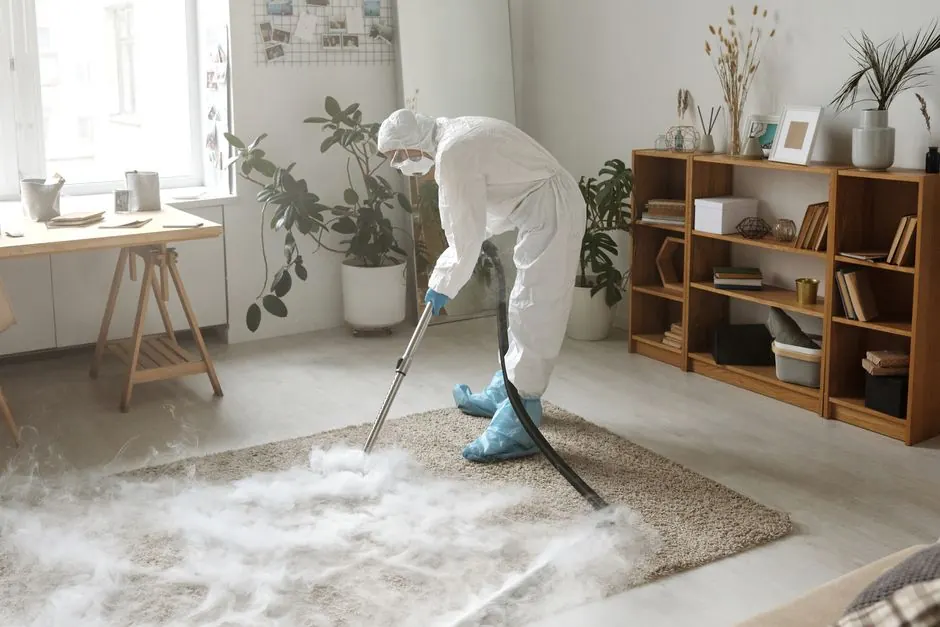
The crawl space access is sealed and negative-air machines with HEPA filters run during removal, so spores do not migrate into your living space. Technicians wear full protective equipment.
Removal + HEPA Vacuuming
Contaminated insulation, drywall, and debris go into sealed bags. Every joist, sill plate, and subfloor surface is HEPA-vacuumed.
Antimicrobial Treatment
Antimicrobial coatings are applied to framing and joists that stay, after physical removal — treatment is the finishing step, never the whole job.
Drying to Standard
Dehumidifiers and air movers dry framing and subfloor to standard, with readings logged through the job for your file.
Independent Clearance
A separate tester collects air and surface samples and you receive a written clearance report — the document that proves the space passed before anything is closed up.
The Crawl Space Process, Step by Step
The same sequence on every crawl space job, so you always know what happens next.
Call + Symptoms
Musty odor, warped floors, or symptoms that spike indoors — we ask what you have noticed and whether the home has a crawl space at all.
Crawl Inspection + Written Scope
Full crawl with meter, thermal camera, and boroscope; photos of every affected area; the water source identified in writing before any work.
Containment at Access
Access sealed, negative air running, living space protected before removal starts.
Removal
Contaminated insulation, drywall, and debris out in sealed bags.
HEPA Vacuum + Treatment
Joists, sill plates, and subfloor HEPA-vacuumed; antimicrobial treatment on framing that stays.
Drying, Logged
Equipment runs to dry standard with readings logged through the job.
Independent Clearance
Separate tester, accredited lab, written report — the pass comes before anything is closed up.
Barrier / Encapsulation Decision
Vapor barrier or full encapsulation, decided from the inspection findings and quoted as its own scope — never sold before anyone has been underneath.
Vapor Barrier vs. Encapsulation: What Actually Changes
These are not two names for the same thing. A vapor barrier blocks ground moisture only; encapsulation blocks ground moisture and vent moisture, and controls humidity.
| Vapor barrier | Full encapsulation | |
|---|---|---|
| What it is | Heavy-duty liner across the dirt floor (and up foundation walls) | Liner + sealed vents and gaps + dehumidification to hold the space dry |
| What it blocks | Moisture evaporating from the soil | Soil moisture AND humid air entering through vents |
| Right when | The space is dry and stays dry, no water after heavy rain, no smell in the house | Smell in the house (especially after rain), soft or cold floors, visible mold or rot, water after storms |
| Watch out for | Vents left open can still bring humid air in after storms; moisture can collect under the liner | Priced as its own scope; worth it only when the findings support it |
A barrier alone can leave a crawl space that still smells and still reads damp, because open vents bring humid air in after storms. Encapsulation without dehumidification has the same weakness. The decision comes from the inspection — what is actually wet, where the water comes from, and whether the space stays dry between storms — not from a sales script. EPA guidance is to keep indoor humidity below 60%.

Signs Your Crawl Space Has a Mold Problem
Crawl spaces are rarely inspected, so the house sends signals upward instead.
A strong, musty smell — especially after it rains. The classic crawl space tell: the odor reaches living spaces because air moves upward from below.
White or gray spots on wood or insulation. Growth on joists and subfloor is often the first visible sign, found only by crawling the space.
Discoloration or staining on baseboards or floors. Moisture wicking up from below shows at the edges first.
Soft, sagging, or uneven floors above the crawl space. This is a structural warning, not just a mold symptom: get a structural engineer before any mold work, because a mold company treats growth and an engineer judges structure.
Symptoms that spike indoors. Sneezing, itchy skin, or worsened asthma at home that eases elsewhere can be part of the picture — within the CDPH symptom ceiling (asthma attacks, allergic rhinitis, respiratory symptoms, eye irritation, eczema). No diagnosis is made here; talk to a healthcare professional about symptoms, and fix the moisture either way.
Musty smell coming from HVAC vents, or condensation on pipes. Ductwork running through a damp crawl space picks up odor and condensation, and carries both into the rooms.
Why La Mirada Crawl Spaces Grow Mold
Where crawl spaces exist in La Mirada, the causes are local and specific.
Plumbing drips. A slow drip under the house raises humidity fast and feeds joists for months before anyone notices — the same aging-copper and cast-iron-drain story as the slab leaks, just visible from below instead of hidden in concrete.
Duct condensation. Air conditioning ductwork running through a cool crawl space sweats, and that condensation keeps insulation and wood damp through the cooling season.
Ground vapor through dirt floors. Exposed soil releases vapor into the space year-round. Without a liner, the crawl space never fully dries, even between storms.
Poor drainage and grading. Clogged gutters, broken downspouts, or grading that slopes toward the home let water pool near the foundation — and in the eastern hillside areas, slope drainage adds water from above as well. Rain falls about 14–15 inches a year, mostly November through March, and NOAA’s Winter 2026–27 outlook projects a strong-to-very-strong El Niño with elevated odds of above-normal Southern California precipitation from December 2026 through March 2027 — forecasts favour a wet winter, which is when storm-driven mold demand rises. That is a probabilistic forecast, not a guarantee of rain or damage.
What Does Crawl Space Mold Removal Cost in La Mirada?
Straight answer: these are typical market ranges, not a quote. Crawl space pricing moves more on access than on any other factor.
| Service | Typical range (LA area) |
|---|---|
| Crawl space mold removal | $544 – $2,176 |
| With encapsulation and/or difficult access | Up to ~$11,500 |
| Clearance visit (survey + moisture mapping + written report) | $326 – $1,170 |
Ranges are Angi Los Angeles-area estimates (encapsulation ceiling per a San Diego guide), not quotes. Your price comes only after we know the space and the scope.
What moves a quote: access height and entry size, affected square footage, how much insulation must come out, whether encapsulation is scoped, clearance inclusion, and rebuild scope. Encapsulation is always quoted as its own scope, decided after inspection. For your budget, call us: call (562) 249-2135 and you will get your exact crawl space price and a written scope before any work starts.
DIY or Call a Professional?
A flashlight look is fine. Removal is a different job — and soft floors change the question entirely.
| DIY | Professional | |
|---|---|---|
| Flashlight look underneath | Reasonable — look for spots, standing water, fallen insulation | Full crawl with meter, thermal camera, photos, written report |
| Removing contaminated insulation | No — contaminated material needs sealed bags, PPE, and containment | Yes — sealed bags, HEPA vacuuming, contained work |
| Spraying bleach on joists | No — bleach does not penetrate porous wood; the growth stays | Physical removal first, antimicrobial treatment second |
| Installing a vapor barrier | No — the wrong barrier traps moisture instead of stopping it | Yes — barrier or encapsulation scoped after inspection |
| Soft or sagging floors | No — structural engineer first, before any mold work | Mold work after the engineer judges the structure |
| Right for | A look underneath, and nothing more | Everything else |
The number one crawl space mistake: spraying the joists and calling it handled while the plumbing drip, the duct condensation, or the ground vapor keeps feeding the wood. The growth comes back because the water never left.
California Rules: What Is Actually Required
California has no mold-specific license. Construction work of $500 or more requires a CSLB-licensed contractor, and ANSI/IICRC S520 is the voluntary professional standard for remediation. If a company claims a “California mold license,” that license does not exist — ask what they actually hold.
Texas-style rules you may read about elsewhere — a TDLR mold license, a 25-square-foot licensing trigger, a rule that the company that assesses cannot be the company that remediates, and a Certificate of Mold Damage Remediation — do not apply in California. They are Texas law, and this page makes no Texas claim.
How to vet any crawl space contractor: ask for photos of every affected area and a written scope before work starts; ask whether clearance testing is included and who performs it; ask whether encapsulation is being sold before anyone has been underneath (a red flag); and be suspicious of anyone who quotes a firm crawl space price without crawling the space.
La Mirada Crawl Space Scenarios
Representative scenarios — common crawl space mold removal La Mirada scopes of work, not claimed past jobs. No client names, addresses, or reviews are claimed.
Musty bedroom above a moldy crawl space
What happens: smell-first investigation underneath finds growth on joists and a slow plumbing drip feeding it. Contaminated insulation comes out in sealed bags, joists are HEPA-vacuumed and treated, the drip is documented for the plumber, and clearance samples go to an accredited lab. Outcome: the bedroom smell goes with the source, not just the surface.
Hillside home after a winter storm
What happens: slope drainage sends water toward the foundation and the crawl space shows standing water after storms. Removal comes first; then the inspection findings support a full encapsulation scope — liner, sealed vents, dehumidification — quoted on its own, because a barrier alone would still let vent moisture in. Outcome: the space stays dry between storms instead of re-wetting every winter.
Rental with a tenant complaint
What happens: the tenant reports a musty smell and the owner needs facts, not argument. Inspection photos, moisture readings, and a clearance summary give both sides the same document. Outcome: the complaint is resolved on paper, and the owner holds the record for the next turnover.
Frequently Asked Questions About Crawl Space Mold Removal in La Mirada
Does my La Mirada home even have a crawl space?
Most La Mirada homes do not — the city’s 1950s–1970s tract stock is overwhelmingly slab-on-grade, with no crawl space and no basement. Crawl spaces exist in some hillside and later-built homes and additions. Check for an access hatch, a raised floor, or vents around the foundation perimeter. If your home is slab-on-grade, your hidden-mold paths are slab leaks, baseboards and flooring, and wall cavities — see our mold remediation and water damage pages instead.
What causes mold in a crawl space?
Mold needs moisture, a food source (wood), and poor airflow — and a dirt-floored, poorly lit, rarely inspected crawl space provides all three. The usual causes are plumbing drips, duct condensation, ground vapor rising through dirt floors, and poor drainage: clogged gutters, broken downspouts, or grading that slopes toward the home.
What are the signs of crawl space mold?
A strong, musty smell — especially after it rains — is the classic tell. Others: white or gray spots on wood or insulation, discoloration on baseboards or floors, soft or sagging floors above the space, symptoms that spike indoors, a musty smell from HVAC vents, and condensation on pipes. Any one of these justifies a look underneath.
What is the difference between a vapor barrier and encapsulation?
A vapor barrier is a heavy-duty liner across the dirt floor (and up foundation walls) that blocks moisture evaporating from the soil. Encapsulation adds sealed vents and gaps plus dehumidification, so it blocks soil moisture AND humid air entering through vents, and holds the space dry. A barrier alone can still let vent moisture in after storms.
Do I need encapsulation or just a vapor barrier?
A barrier is often enough when the space is dry and stays dry, no water shows up after heavy rain, and there is no smell in the house. Encapsulation is usually the better call when you smell must in the house (especially after rain), floors feel soft or cold, you have seen mold or rot, or water shows up after storms. The decision comes from the inspection findings, not from a sales script — and it is quoted as its own scope.
How much does crawl space mold removal cost in La Mirada?
Crawl space mold removal in the Los Angeles area runs about $544–$2,176 (Angi LA estimates, not quotes), rising to up to ~$11,500 with encapsulation and/or difficult access per a San Diego guide. What moves the price is access height and entry size, affected square footage, how much insulation must come out, encapsulation scope, clearance inclusion, and rebuild scope. For your exact price and written scope, call (562) 249-2135.
Can I clean crawl space mold myself?
A flashlight look underneath is fine. Removal is not a DIY job: contaminated insulation needs sealed bags, protective equipment, and containment, and bleach does not penetrate porous wood — the growth stays. And if floors are soft or sagging, get a structural engineer first, before any mold work.
Will removing the mold fix the musty smell in the house?
Only if the moisture source is fixed too. Air moves upward from the crawl space into living areas, so the smell goes with the source — the plumbing drip, the duct condensation, or the ground vapor — not just with the surface growth. Removal plus source correction plus the right barrier decision is what ends the smell.
What if my floors are soft or sagging above the crawl space?
That is a structural warning, not just a mold symptom. Get a structural engineer before any mold work: a mold company treats growth, and an engineer judges whether the framing is still sound. Mold work follows the engineer’s judgment, not the other way around.
Does crawl space mold affect indoor air quality?
Yes — air moves upward from the crawl space into the rooms above, carrying odor and spores with it. That is why a musty smell in a bedroom or symptoms that spike indoors can trace back to growth nobody has looked at in years. Within the CDPH symptom ceiling, damp buildings are associated with asthma attacks, allergic rhinitis, respiratory symptoms, eye irritation, and eczema; no diagnosis is made here, and symptoms should be discussed with a healthcare professional.
Does California require a mold license for crawl space work?
No — California has no mold-specific license. Construction work of $500 or more requires a CSLB-licensed contractor, and ANSI/IICRC S520 is the voluntary professional standard. Texas rules (TDLR license, 25-square-foot trigger, assessor-remediator separation, CMDR certificate) do not apply in California.
What happens after crawl space remediation — clearance?
A separate tester collects air and surface samples and you receive a written clearance report — the document that proves the space passed before anything is closed up or any barrier work is finished. If the area fails, it goes back for re-cleaning and re-testing. Rebuild and barrier work wait for a pass.
Related Services in La Mirada
Mold Remediation · Mold Inspection · Mold Testing · Post-Remediation Clearance Testing · Attic Mold Removal · Water Damage & Mold Cleanup · Emergency Mold Removal (24/7)
Also serving Whittier, Norwalk, Buena Park, Cerritos, Fullerton, and La Habra.
Need Crawl Space Mold Removal in La Mirada Today?
Musty bedroom, soft floor, smell that gets worse after rain — if your home has a crawl space, the answer is underneath it. We answer 24/7 for emergencies and start with a full crawl inspection and a written scope. La Mirada crawl space mold removal for hillside and later-built homes — one call covers the inspection, the scope, and the barrier decision. Call (562) 249-2135 and find out what is actually down there.
Contact La Mirada Mold Pros
Call (562) 249-2135 and we will schedule an inspection, usually the same day when a technician is available, otherwise the next day. Our phones are answered 24/7 for emergencies; regular office hours are listed below. If you are in La Mirada or anywhere in Los Angeles County, we can be at your door fast.
La Mirada Mold Pros
-
Phone
(562) 249-2135 -
Address
Serving La Mirada & surrounding areas, CA 90638, La Mirada, California
-
Hours
Mon–Sun: 8AM – 7PM
24/7 Emergency Calls